
Understanding the New Dual Approach to Search Visibility for Retail Brands
If you’re an e-commerce brand manager or digital marketing leader, you’ve likely mastered the art of traditional SEO over the years. You’ve optimized product descriptions, built backlink profiles, and tracked your SERP rankings religiously. But in the last 18 months, a seismic shift has occurred that many brands are still struggling to address – the rise of AI-powered search and the entirely new visibility landscape it creates.
Today’s e-commerce visibility isn’t a choice between SEO or AI Engine Optimization (AEO) – it’s a requirement for both, operating in parallel but requiring fundamentally different approaches.
In this comprehensive guide, we’ll explore why e-commerce brands need both SEO and AEO strategies, the key differences between them, and the tactical steps you need to implement now to ensure visibility across both traditional search and emerging AI platforms.
Jump to a specific section in this article ↓↓
- WHY AI SEARCH IS TRANSFORMING E-COMMERCE VISIBILITY
- FUNDAMENTAL DIFFERENCES BETWEEN SEO AND AEO
- KEY METRICS: WHAT TO MEASURE IN EACH CHANNEL
- THE NEW VISIBILITY RISK: AI HALLUCINATIONS AND YOUR BRAND
- IMPLEMENTING AEO WITHOUT SACRIFICING SEO
- STRATEGIC FRAMEWORKS FOR DUAL-CHANNEL OPTIMIZATION
- ADAPTING YOUR TEAM AND TOOLS FOR THE NEW REALITY
- FREQUENTLY ASKED QUESTIONS ABOUT AEO AND SEO
- BUILDING YOUR INTEGRATED VISIBILITY STRATEGY

WHY AI SEARCH IS TRANSFORMING E-COMMERCE VISIBILITY
The search landscape has fundamentally changed, and understanding this shift is critical before diving into tactical approaches.
The Rise of AI-Assisted Shopping
The data tells a compelling story about consumer behavior evolution:
In 2023, just 12% of consumers reported using AI tools for product research. By early 2026, that number has exploded to 43% and continues to grow. This isn’t a fringe behavior – it’s rapidly becoming mainstream, particularly among higher-income demographics that many brands covet.
What’s driving this adoption? AI search offers consumers key advantages:
- Synthesized information instead of pages of blue links
- Multi-factor comparison across brands without tab switching
- Natural language interaction that matches human shopping questions
For e-commerce brands, this creates a dual visibility requirement. When a consumer asks, “What’s the best lightweight laptop under $1,000 with at least 16GB of RAM?” they could either:
- Type that into Google and click through multiple product pages
- Ask ChatGPT, Claude, or Perplexity and receive a synthesized answer immediately
Your visibility strategy must now account for both paths simultaneously.
The Scale and Scope of AI-Driven Shopping
This isn’t just about a new channel – it’s about an entirely new information architecture.
AI shopping assistants draw from multiple sources to form their recommendations, including:
- Crawled web content (product pages, reviews, comparison sites)
- Structured data feeds (where available)
- User-provided context and preferences
- Previous interaction history
The critical difference is that AI doesn’t just rank and present information – it interprets, synthesizes, and forms recommendations. This creates both opportunities and significant risks for brands that aren’t monitoring these systems.
Using TrackBuy’s free AI Bot Checker, brands can quickly determine if their product content is even accessible to AI systems, which is the first requirement for visibility. Many discover their sites inadvertently block these systems through poorly configured robots.txt files or JavaScript implementations.
↑↑ Back to the list at the top ↑↑

FUNDAMENTAL DIFFERENCES BETWEEN SEO AND AEO
Understanding why traditional SEO approaches don’t transfer directly to AI Engine Optimization is essential for developing effective strategies.
Content Structure and Emphasis
In traditional SEO, your optimization focuses on elements like:
- Keyword density and placement in titles, meta descriptions, H tags, and body content. This requires strategic repetition of target phrases.
- Structured data markup (Schema.org) to help search engines categorize content.
- Page-level signals including load speed, mobile responsiveness, and user interaction metrics.
AEO, by contrast, requires optimization for:
- Natural language conversation that matches how people verbally inquire about products.
- Context-rich product attributes that enable comparative analysis rather than just feature listings.
- Entity relationships that clearly connect your products to relevant categories, use cases, and alternatives.
This fundamental difference means simply applying SEO tactics to AI visibility will fail. As one e-commerce director shared with us: “We ranked #1 on Google for our category keywords but were completely invisible to ChatGPT. It was recommending competitors with clearer specification data, even though their sites had worse SEO.”
Ranking Factors and Visibility Signals
The factors that determine visibility also differ substantially between channels:
- SEO ranking factors center on:
- Backlink profiles and authority metrics
- Crawlability and technical performance
- Historical engagement signals
- Keyword relevance and content comprehensiveness
- AEO visibility factors prioritize:
- Information structure and knowledge graph positioning
- Specification clarity and attribute completeness
- Cross-reference verification from multiple sources
- Natural language alignment with consumer questions
These different signals require distinct approaches, which is why leading brands are now developing parallel strategies rather than trying to force-fit existing SEO frameworks into the AI landscape.
Temporal Differences in Optimization
Another critical difference lies in the update and refresh cycles:
Traditional search engines operate on relatively predictable indexing and ranking refresh cycles. While algorithm updates create volatility, the basic mechanics remain consistent month-to-month.
AI systems, particularly those with RAG (Retrieval-Augmented Generation) architectures, operate on significantly different timelines. They may incorporate new information more quickly in some scenarios but lag substantially in others, creating an inconsistent visibility landscape that requires regular monitoring.
↑↑ Back to the list at the top ↑↑
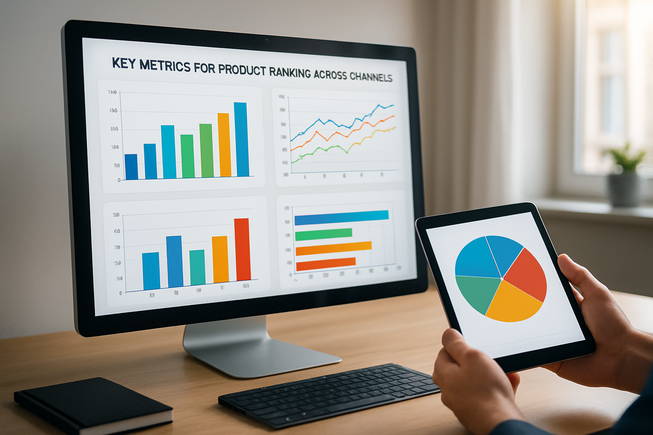
KEY METRICS: WHAT TO MEASURE IN EACH CHANNEL
With the fundamental differences established, let’s examine the distinct metrics that matter for each visibility channel.
SEO Performance Indicators
Traditional search performance continues to revolve around established metrics:
- Rank position for target keywords remains a foundational measurement, though increasingly with local and personalization factors.
- Organic traffic volume provides the actual business impact of your SEO efforts.
- Clickthrough rates from SERPs to landing pages demonstrate the effectiveness of your titles and descriptions.
- Conversion rates from organic traffic show how well your SEO targets align with purchase intent.
Most e-commerce teams have robust dashboards for these metrics, often using tools like SEMrush, Ahrefs, or Moz alongside Google Analytics.
AEO Performance Indicators
AI visibility requires an entirely new measurement framework with metrics like:
- AI Visibility Index – The percentage of relevant product queries where your products appear in AI recommendations, measured across multiple AI platforms.
- Accuracy Score – The correctness of product specifications, pricing, and availability when your products are mentioned, as hallucinations and errors are common.
- Mention Share – How frequently your products are mentioned compared to competitors for the same query types, similar to share-of-shelf in retail.
- Source Verification Rate – How often AI systems cite your direct content versus third-party sources when discussing your products.
These metrics require specialized tracking that most analytics platforms don’t yet provide. Tools like TrackBuy have emerged to give e-commerce teams visibility into these critical AI-specific metrics.
Integrated Performance View
Forward-thinking brands are now developing unified dashboards that merge both SEO and AEO metrics to provide a complete visibility picture.
This integrated approach allows for:
- Identification of visibility gaps across channels
- Resource allocation based on comparative performance
- Early detection of emerging visibility trends
- Competitive intelligence across both traditional and AI search
Such integration is particularly valuable for agencies and holding companies managing multiple brands, as it provides portfolio-wide visibility intelligence.
↑↑ Back to the list at the top ↑↑

THE NEW VISIBILITY RISK: AI HALLUCINATIONS AND YOUR BRAND
Perhaps the most significant difference between traditional search and AI systems is the emergence of hallucinations – AI-generated content that misrepresents your products in ways that never occurred with traditional search engines.
Types of AI Hallucinations Affecting E-commerce
Our analysis of over 1,200 products across AI platforms identified four common types of hallucinations:
- Specification errors occur when AI systems attribute incorrect features to your products. These range from minor (wrong dimensions) to major (stating a product is waterproof when it isn’t).
- Pricing hallucinations present incorrect price points, often mixing up different models or confusing sale prices with standard pricing. These create significant customer frustration and potential MAP (Minimum Advertised Price) compliance issues.
- Availability misrepresentations suggest products are in stock when they’re not, or vice versa, creating poor customer experiences.
- Relationship hallucinations incorrectly associate your products with categories, use cases, or compatibility that doesn’t exist, potentially creating safety or liability issues.
The frequency of these issues is alarming. In our study, 47% of product mentions contained at least one factual error, with pricing hallucinations being the most common at 31%.
The Commercial Impact of Hallucinations
These aren’t merely technical curiosities – they have direct business impact:
- Lost revenue when consumers receive incorrect information or are directed to competitors
- Brand damage when AI systems present your products with errors or limitations they don’t have
- Customer service burden from inquiries about non-existent features or incorrect pricing
- Legal and compliance risk particularly around pricing claims and product capabilities
Unlike traditional search, where the worst outcome was simply not ranking, AI hallucinations actively misrepresent your brand in ways that directly harm your business.
Monitoring and Mitigation Approaches
Addressing these risks requires new workflows that many brands haven’t yet implemented:
- Regular hallucination audits across major AI platforms, checking how your products are represented for various query types.
- Source verification processes to ensure AI systems cite your authoritative content rather than potentially outdated third-party sources.
- Correction protocols for working with AI providers when significant hallucinations are identified.
- Specification clarity initiatives to make product attributes unambiguous and easy for AI systems to extract correctly.
↑↑ Back to the list at the top ↑↑

IMPLEMENTING AEO WITHOUT SACRIFICING SEO
The good news is that effective AEO doesn’t require abandoning your SEO investment. Instead, it builds upon that foundation with strategic enhancements.
Structural Content Adaptations
Several content adaptations support both SEO and AEO simultaneously:
- FAQ expansion – Comprehensive FAQ sections with natural language questions and answers serve both traditional search (through FAQ schema) and AI training (by providing clear, structured answers to common questions).
- Specification standardization – Consistent attribute formatting across product pages helps both search engines and AI systems extract and compare features accurately.
- Comparative context – Explicitly stating how your products compare to alternatives or previous versions provides valuable context for both search channels.
These adaptations enhance existing content without requiring a complete overhaul, making them practical first steps for most e-commerce teams.
Technical Implementation Priorities
Several technical elements specifically support AI visibility:
- Structured data expansion beyond basic product schema to include detailed specification attributes, compatibility information, and use case scenarios.
- Natural language processing (NLP) tags that highlight key product claims and features in ways that help AI systems extract accurate information.
- Accessibility improvements that make your content more parseable not just for users with disabilities but also for AI crawlers that leverage similar extraction techniques.
According to our implementation data, brands that made these technical changes saw a 27% average improvement in AI visibility scores within 60 days, without negative impacts on traditional SEO performance.
Content Strategy Evolution
Your content strategy may need the most significant evolution to support dual-channel visibility:
- Question-answer mapping to ensure your content directly addresses the specific questions consumers ask about your product category, both explicitly and implicitly.
- Authoritative comparison content that provides factual, balanced evaluations of your products versus alternatives, which AI systems can cite without resorting to third-party sources.
- Specification clarity initiatives that eliminate ambiguous product descriptions and ensure consistent attribute presentation across all products.
These content evolutions require deeper changes to your content creation processes, but provide the foundation for strong performance in both traditional search and AI-driven discovery.
↑↑ Back to the list at the top ↑↑
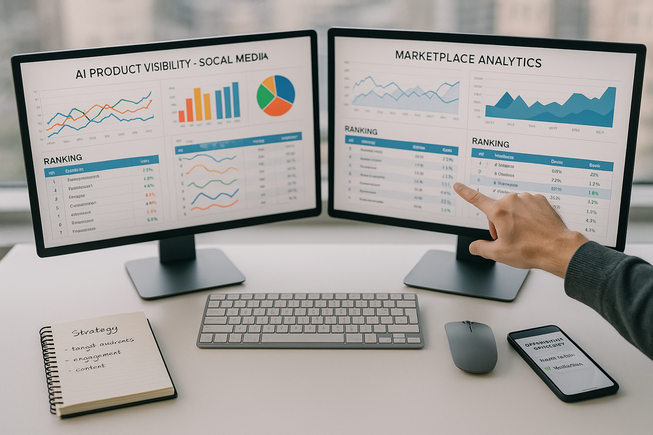
STRATEGIC FRAMEWORKS FOR DUAL-CHANNEL OPTIMIZATION
Integrating SEO and AEO requires a strategic framework that acknowledges both their differences and interconnections.
The Three-Layer Visibility Model
Many successful e-commerce teams have adopted a three-layer approach to optimization:
- Foundation Layer – Elements that benefit both channels
- Clean information architectureComprehensive product specificationsFast-loading, accessible contentStrong brand authority signals
- SEO-Specific Layer – Elements primarily for traditional search:
- Keyword optimization and SERP featuresTechnical SEO complianceBacklink acquisitionHistorical engagement optimization
- AEO-Specific Layer – Elements primarily for AI visibility:
- Natural language product narrativesComparative context and positioningEntity relationship clarificationSource authority development
This layered approach allows teams to identify where their efforts serve both channels and where channel-specific work is needed.
Resource Allocation Models
The question of how to allocate limited resources between SEO and AEO remains challenging for many brands. Three models have emerged:
- Traffic-Based Allocation divides resources based on the current traffic and conversion contribution from each channel. While practical, this tends to under-invest in emerging AI channels that are growing rapidly.
- Growth Potential Allocation weights investment toward channels showing the highest growth rates. This often favors AEO given its current trajectory but may sacrifice short-term results.
- Competitive Gap Allocation focuses resources on channels where your visibility lags competitors most significantly. This balanced approach addresses your most vulnerable areas first.
For most mid-market e-commerce brands, a blended approach proves most effective: maintain SEO investment to protect current traffic while allocating 15-30% of resources to AEO development, increasing this percentage as AI-driven shopping continues to grow.
Implementation Phasing
Successfully implementing dual-channel optimization typically follows a four-phase process:
- Phase 1: Assessment – Establish baseline metrics for both SEO and AEO performance, identifying the most significant gaps.
- Phase 2: Foundation Building – Implement the shared foundation elements that benefit both channels.
- Phase 3: Channel-Specific Optimization – Address the unique requirements of each channel, starting with the areas of largest competitive gaps.
- Phase 4: Integration and Scaling – Develop unified workflows and reporting that make dual-channel optimization sustainable.
This phased approach allows brands to adapt gradually without disrupting existing SEO performance while building AEO capabilities.
↑↑ Back to the list at the top ↑↑
ADAPTING YOUR TEAM AND TOOLS FOR THE NEW REALITY
Perhaps the most challenging aspect of implementing dual-channel optimization is the organizational change required to support it effectively.
Skill Development Requirements
New capabilities your team needs to develop include:
- AI prompt engineering – Understanding how consumers phrase requests to AI systems and how these translate to product discovery.
- Entity relationship mapping – Identifying and strengthening the connections between your products and relevant categories, use cases, and alternatives.
- Hallucination detection and correction – Systematic processes for identifying and addressing AI misrepresentations of your products.
- Multi-platform visibility analysis – Techniques for measuring performance across different AI systems with varying architectures and information sources.
These skills represent a significant evolution beyond traditional SEO capabilities, requiring intentional training and possibly new team members.
Tool Stack Evolution
Your martech stack likely needs enhancement to support AEO alongside SEO:
- AI visibility monitoring tools like TrackBuy provide the specific metrics needed to understand AI performance.
- Content evaluation systems that assess how effectively your content answers natural language questions about your products.
- Hallucination detection services that automatically identify when AI systems misrepresent your products and alert your team.
- Competitive intelligence platforms that track not just traditional search visibility but also AI recommendation patterns.
While this represents additional investment, the alternative – flying blind in AI channels – poses increasing risk as these platforms grow in importance.
Organizational Structure Considerations
Some organizations are also adjusting their team structures to support dual-channel optimization:
- Integrated visibility teams that combine traditional SEO specialists with AI content strategists, working together on holistic visibility.
- AEO specialists embedded within existing SEO teams to ensure AI considerations are incorporated into all content decisions.
- Cross-functional working groups that bring together content creators, technical SEO specialists, and product managers to address visibility holistically.
The right structure depends on your organization’s size and resources, but some form of integrated approach is essential to avoid siloed efforts.
↑↑ Back to the list at the top ↑↑
FREQUENTLY ASKED QUESTIONS ABOUT AEO AND SEO
Is AEO just a trendy term for the same old SEO practices?
No, AEO and SEO are fundamentally different approaches targeting distinct search ecosystems. While SEO focuses on optimizing for traditional search engines that rank and display existing content, AEO focuses on optimizing for AI systems that synthesize, interpret, and generate new content based on their training and retrieval. This creates different requirements for content structure, technical implementation, and measurement. The skills, tools, and strategies that have worked for SEO for years may provide some foundation, but are insufficient for effective AI visibility.
Won’t AI search be just a passing trend that will fade in importance?
The data strongly suggests otherwise. While AI systems will certainly evolve, the fundamental shift toward synthesized, conversational search shows every indication of accelerating, not declining. Consumer adoption has grown from 12% to 43% in just two years, with younger demographics showing even higher utilization rates. Major platforms including Google, Microsoft, and Apple are all integrating AI assistants directly into their core search and operating systems. Rather than a passing trend, this represents a fundamental evolution in how information is discovered and presented online.
How do I measure ROI on AEO when the traffic attribution is challenging?
This is indeed one of the more difficult aspects of AEO, as AI systems don’t always provide clear referral data in analytics. Most successful brands are using a combination of approaches:
- Direct measurement through specialized tools like TrackBuy that track visibility and recommendation rates
- Proxy metrics like branded search volume growth that correlate with AI visibility
- Controlled tests where specific products receive AEO enhancement while others serve as controls. While not perfect, these methods provide reasonable ROI estimation while attribution technology continues to evolve.
Do I need to create entirely separate content for AI visibility versus traditional search?
Not entirely separate, but significantly enhanced. The most efficient approach is the three-layer model discussed earlier: establish a strong foundation that serves both channels, then add channel-specific enhancements for each. Many brands are finding that FAQ content, comparison tables, and specification standardization serve both channels effectively, while needing to create additional natural language narratives and entity relationship content specifically for AI systems.
↑↑ Back to the list at the top ↑↑
BUILDING YOUR INTEGRATED VISIBILITY STRATEGY
The shift to dual-channel optimization isn’t optional for e-commerce brands that want to maintain and grow their digital visibility. As AI-assisted shopping continues its rapid growth, brands that fail to develop AEO capabilities alongside their SEO efforts risk significant visibility gaps and revenue loss.
The good news is that you don’t need to start from scratch. Your existing SEO foundation provides valuable assets that can be enhanced and expanded to support AI visibility. By understanding the fundamental differences between these channels and implementing the strategic frameworks outlined in this article, you can develop an integrated approach that maximizes visibility across both traditional search and AI platforms.
Remember that this is an evolving landscape where early movers gain significant advantages. Brands that implement robust AEO strategies now are establishing visibility patterns that will shape AI recommendations for years to come, while also gathering critical data on how these systems represent their products and categories.
The question isn’t whether to pursue both SEO and AEO, but how quickly and effectively you can implement an integrated strategy that ensures your products are visible, accurately represented, and recommended wherever your customers are searching.
Leave a Reply